By the Eagle Water Damage and Restoration crew · New York, NY
Run your hand over a wall two days after a flood and it will feel dry. Put a moisture meter on it and it may read twice the safe level — because the surface dries days before the cavity behind it. Structural drying exists to close that gap: it is the measured removal of moisture from inside a building's materials, verified against targets, and it's the step that decides whether mold becomes part of your story.
Before equipment is placed, the loss is mapped: thermal imaging to find the water's footprint, pin meters for depth readings in wood and plaster, pinless meters to scan walls and floors quickly. Unaffected materials in the same building provide the reference — the 'dry standard' your building should return to. The map decides where equipment goes and what the job actually is.
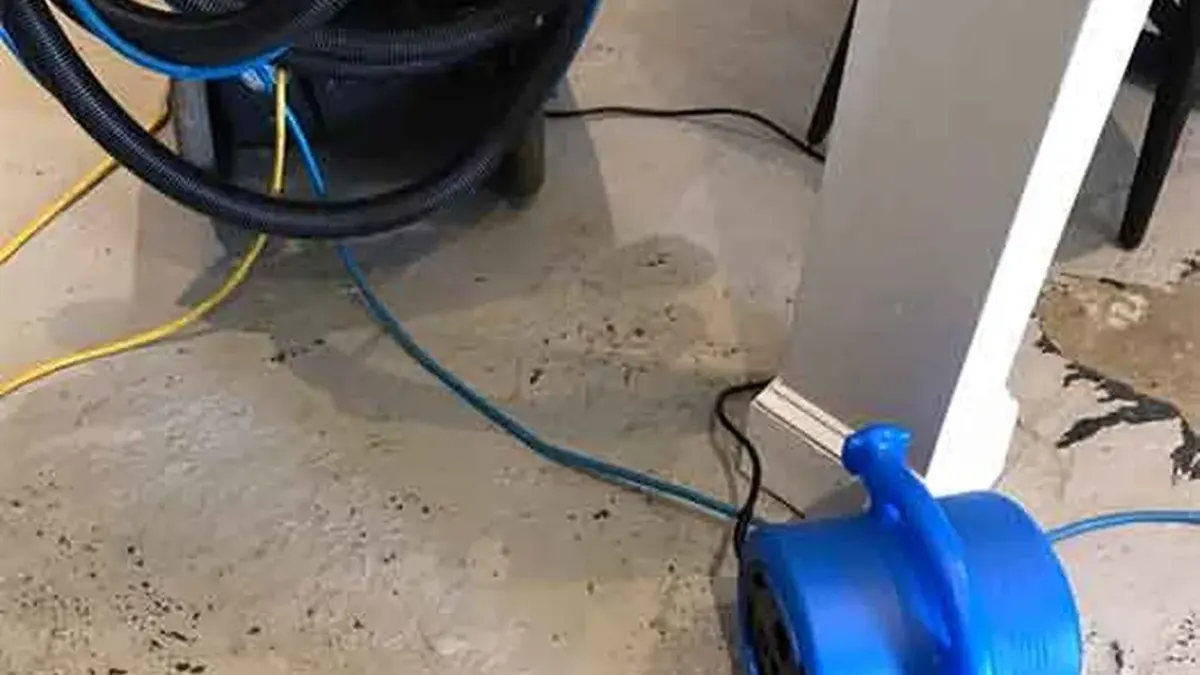
Air movers drive evaporation from wet materials into the air; commercial dehumidifiers pull that moisture out of the air so evaporation can continue. The ratio is engineered to the size and wetness of the loss — too little dehumidification and you're just moving damp air around; too much uncontrolled heat and you can damage finishes. Specialty systems dry hardwood floors and wall cavities in place, pulling moisture through the materials themselves.
Technicians return to log readings — same points, same instruments — until every material reaches its dry target. Most residential losses take three to five days; dense plaster and hardwood take what they take. Equipment leaves when the numbers say so, and the log becomes part of your insurance documentation.
Extraction removes the water you can see; drying removes the water that causes the damage you can't — mold growth, rot, swollen floors, failing paint, months later and rooms away. Skipping verified drying is the most expensive shortcut in restoration. Done right, it's invisible: nothing grows, nothing warps, and the building simply goes back to being a building.
Call (917) 746-3218 — 24/7 across Brooklyn, Queens, Manhattan and Long Island, with a free assessment and a written scope.