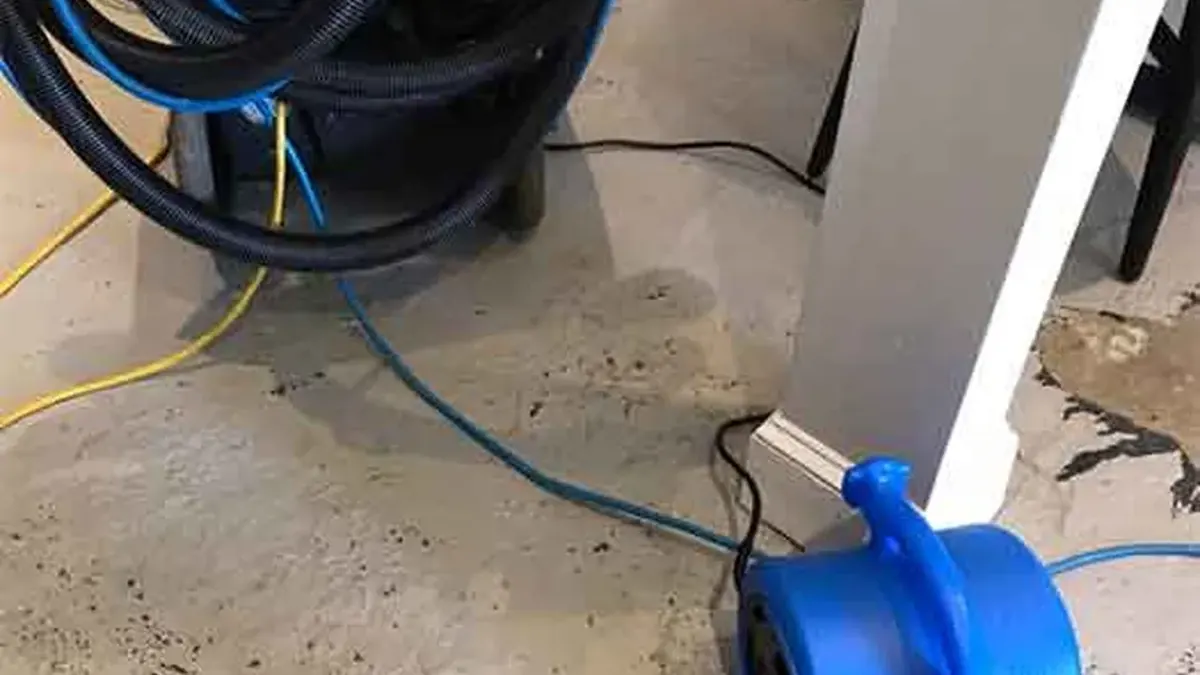
Drying is a science, not a fan in the corner. Commercial dehumidifiers, air movers and daily moisture readings until targets are verified.
Anyone can rent a fan. Structural drying is the discipline of removing moisture from inside a building's materials — wall cavities, hardwood, subfloors, plaster — at the right rate, in the right sequence, and proving it with instruments. Our IICRC-certified technicians size commercial dehumidifiers and air movers to the loss, direct airflow where moisture mapping says the water actually is, and return to take readings until every material reaches its verified dry target. That's the difference between a building that's dry and a building that merely feels dry — the second kind grows mold behind fresh paint.
One call, answered 24/7. A crew is dispatched with pumps, extraction and drying equipment — not just a clipboard.
Thermal imaging and moisture meters map the full extent of the damage, and the scope is documented for you and your carrier.
Standing water out, structure dried to verified targets, surfaces cleaned and treated — mold prevention built into the plan.
Repairs completed, final readings verified, and a walkthrough with the full documentation handed over.
Most residential losses reach dry targets in three to five days. Dense materials — plaster, hardwood, masonry in New York's older buildings — can take longer, and we monitor rather than guess: equipment stays until readings say the structure is dry.
For a small, clean-water spill caught immediately, ventilation helps. For water inside walls, under floors or across multiple rooms, household equipment almost never reaches dry targets — and the gap between 'surface dry' and 'structure dry' is exactly where mold lives. Our monitoring proves which one you have.
Each material has a moisture content considered normal and dry for your building's conditions. We measure the affected materials against unaffected reference points in the same building and dry until they match — a number, not an opinion.